Ireland has an impressive automotive industry. Across the island, companies span every link in the supply chain, from original equipment manufacturers and Tier 1 suppliers to software developers, electronics specialists, and engineering consultancies. Yet for most of its history, Irish automotive players have remainedlargely invisible to each other, producing an overlooked industry.
Future Mobility Campus Ireland set out to change that with the Irish Automotive Summit.
A FIRST-OF-ITS-KIND EVENT
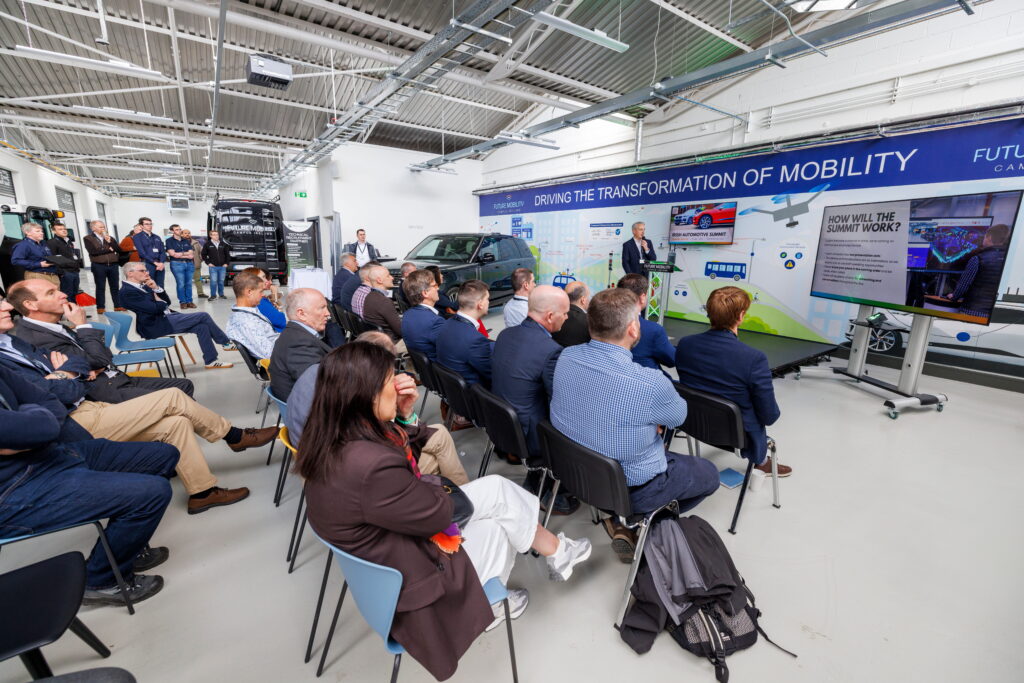
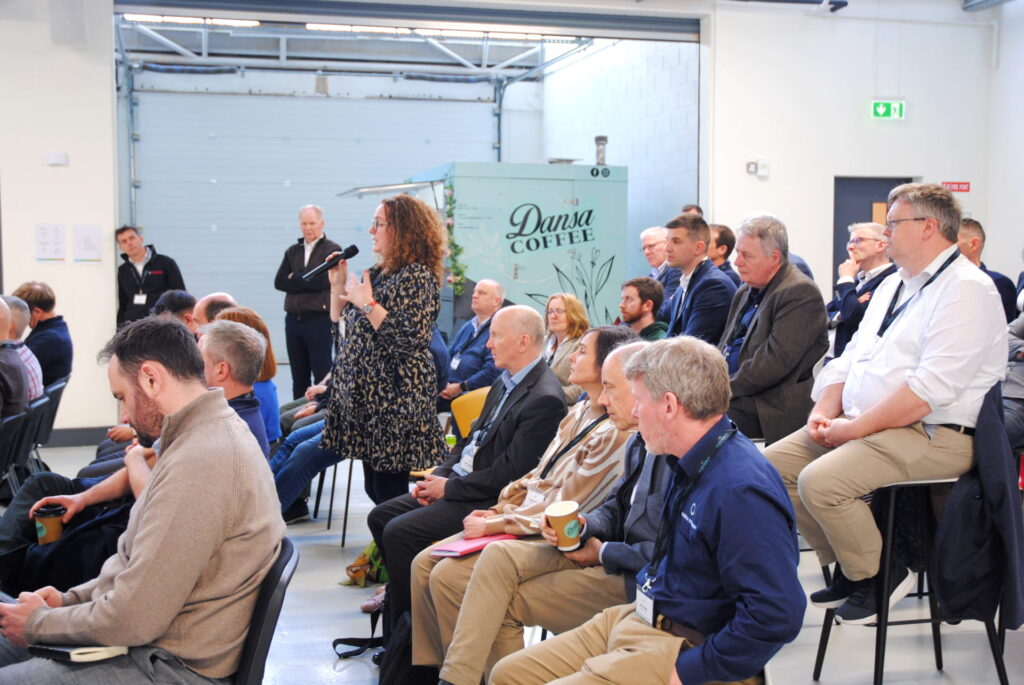
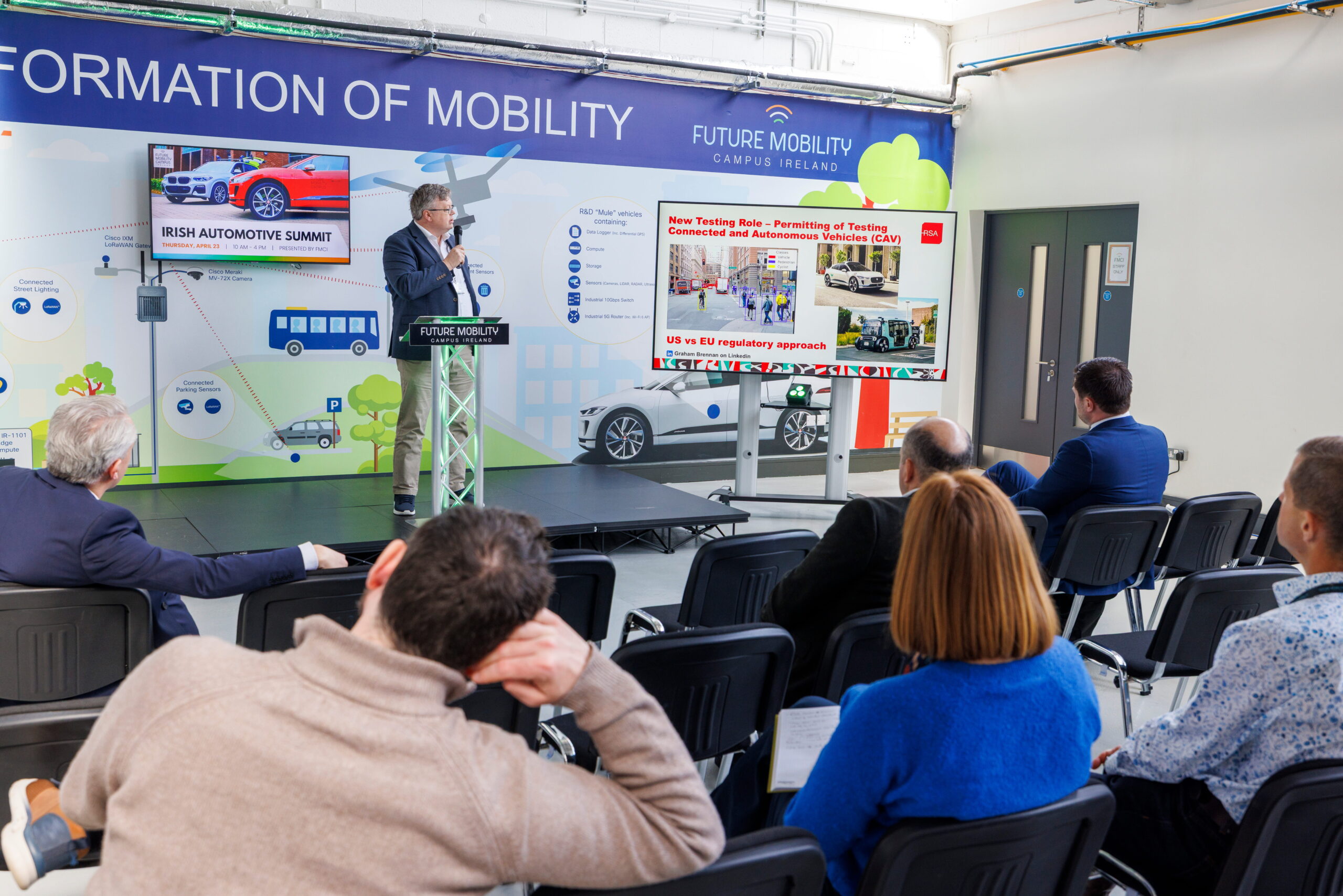
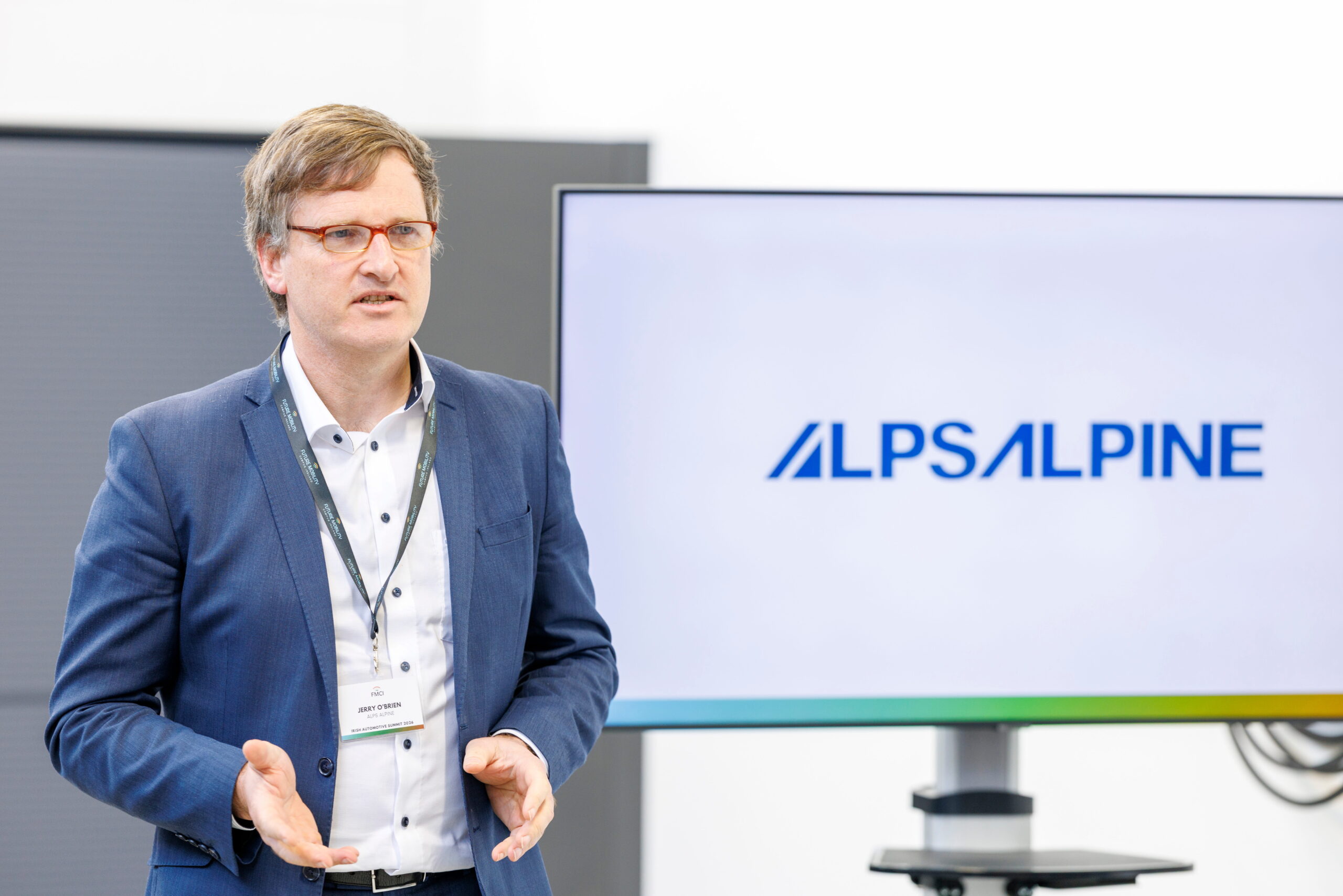
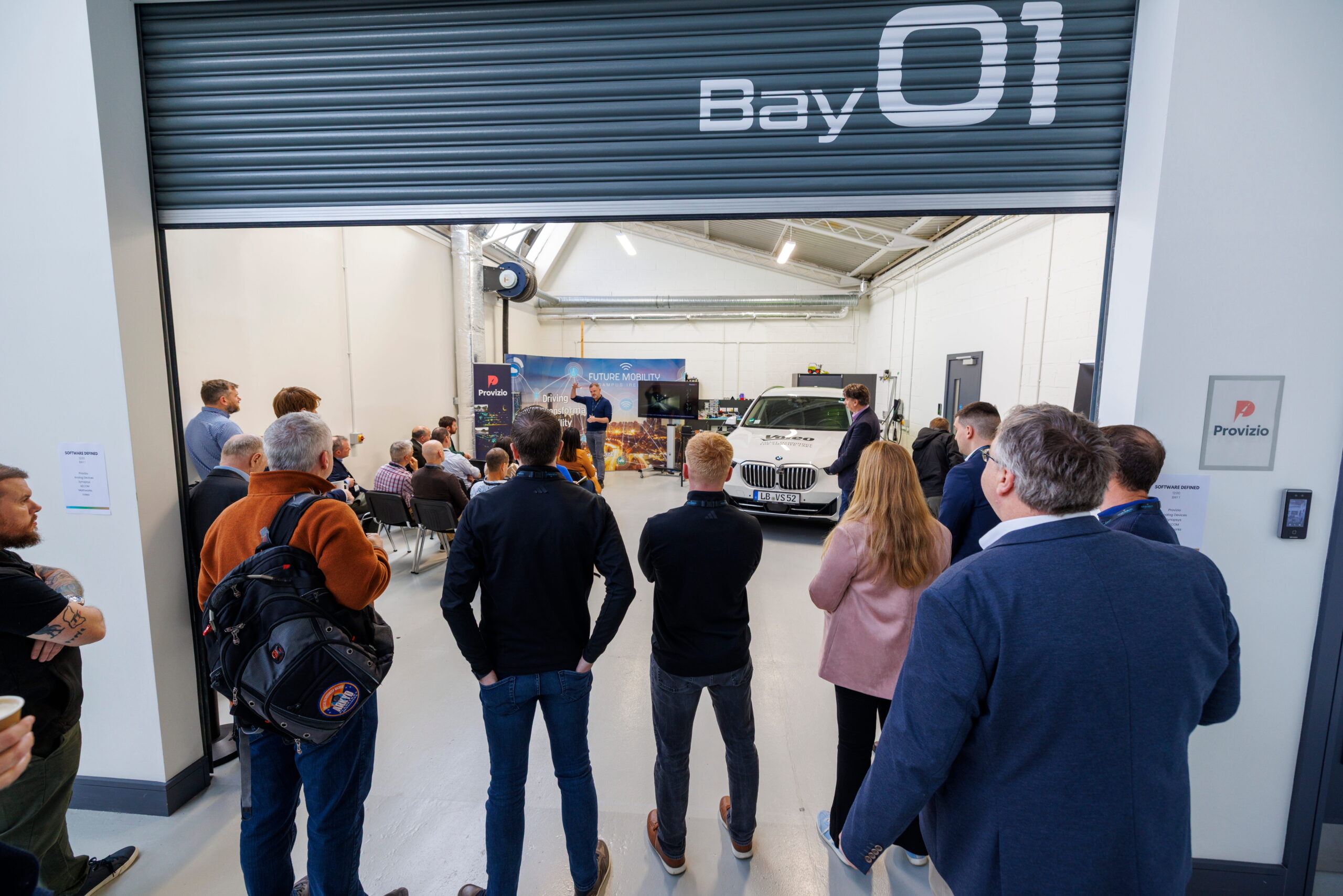
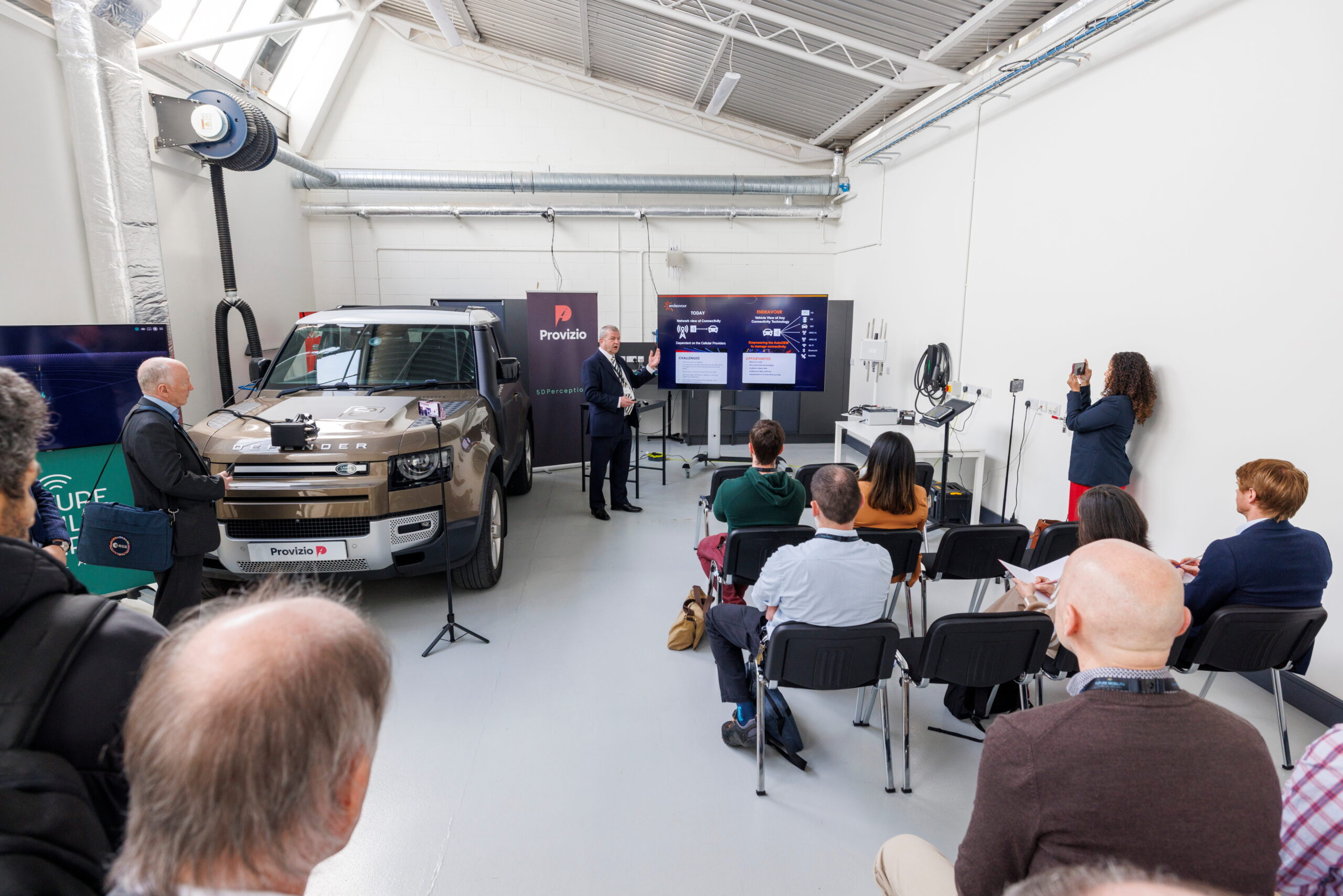
On April 23, 2026, FMCI’s inaugural Irish Automotive Summit brought together over 30 companies for a day of flash presentations, tech demonstrations, and conversation. The event was designed not as your traditional conference, but rather an industry icebreaker where Ireland’s automotive community could take stock of itself, see who else is in the room, and begin building the relationships that will define the industry’s next chapter.
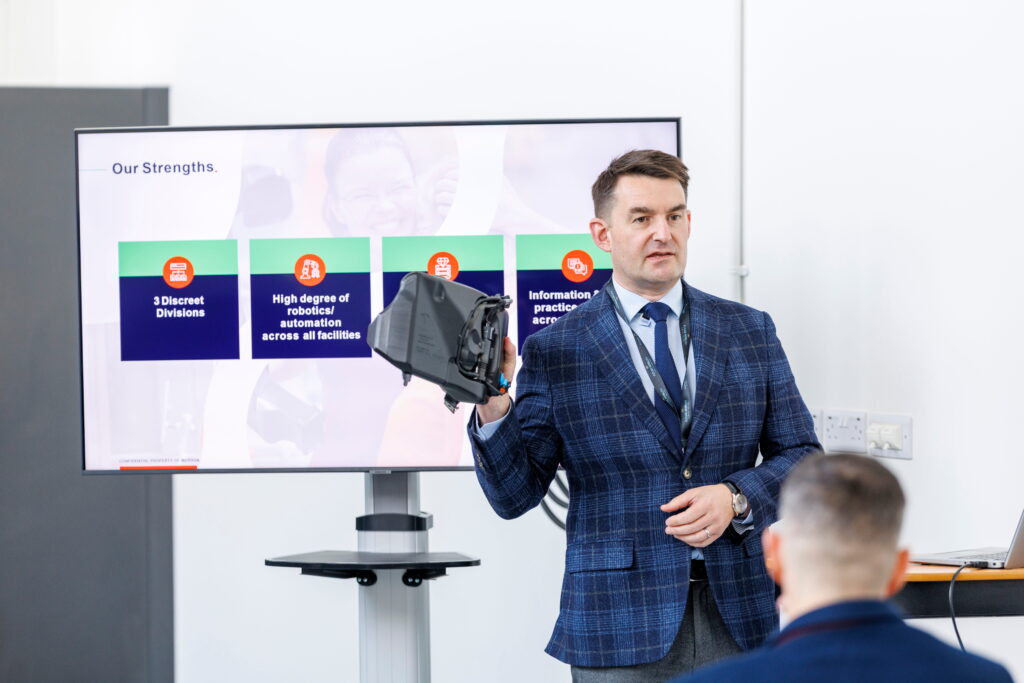
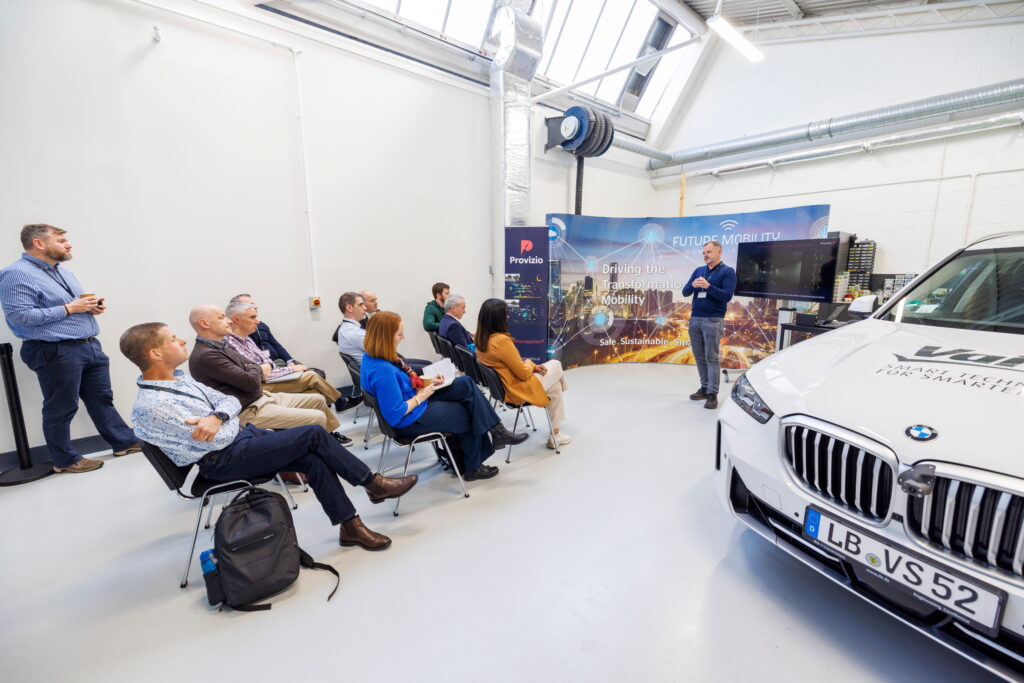
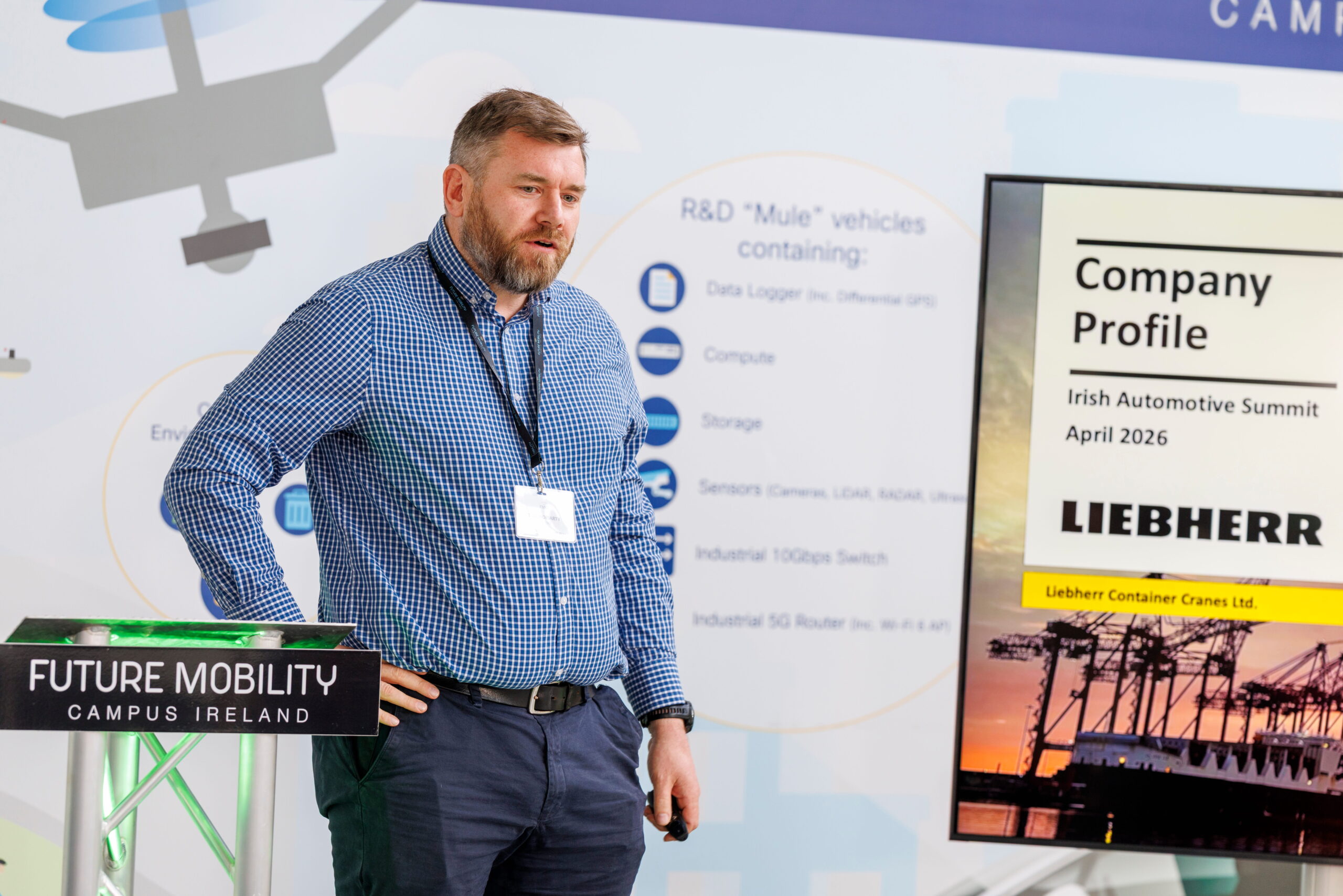
Structured around rapid-fire flash presentation sessions grouped by theme — which covered OEMs, supply chain components, software-defined vehicles, and connected features — the main goal was discovery. Breakout sessions ran concurrently, allowing attendees to move between the topics most relevant to them or network freely.
THE DAY IN DETAIL
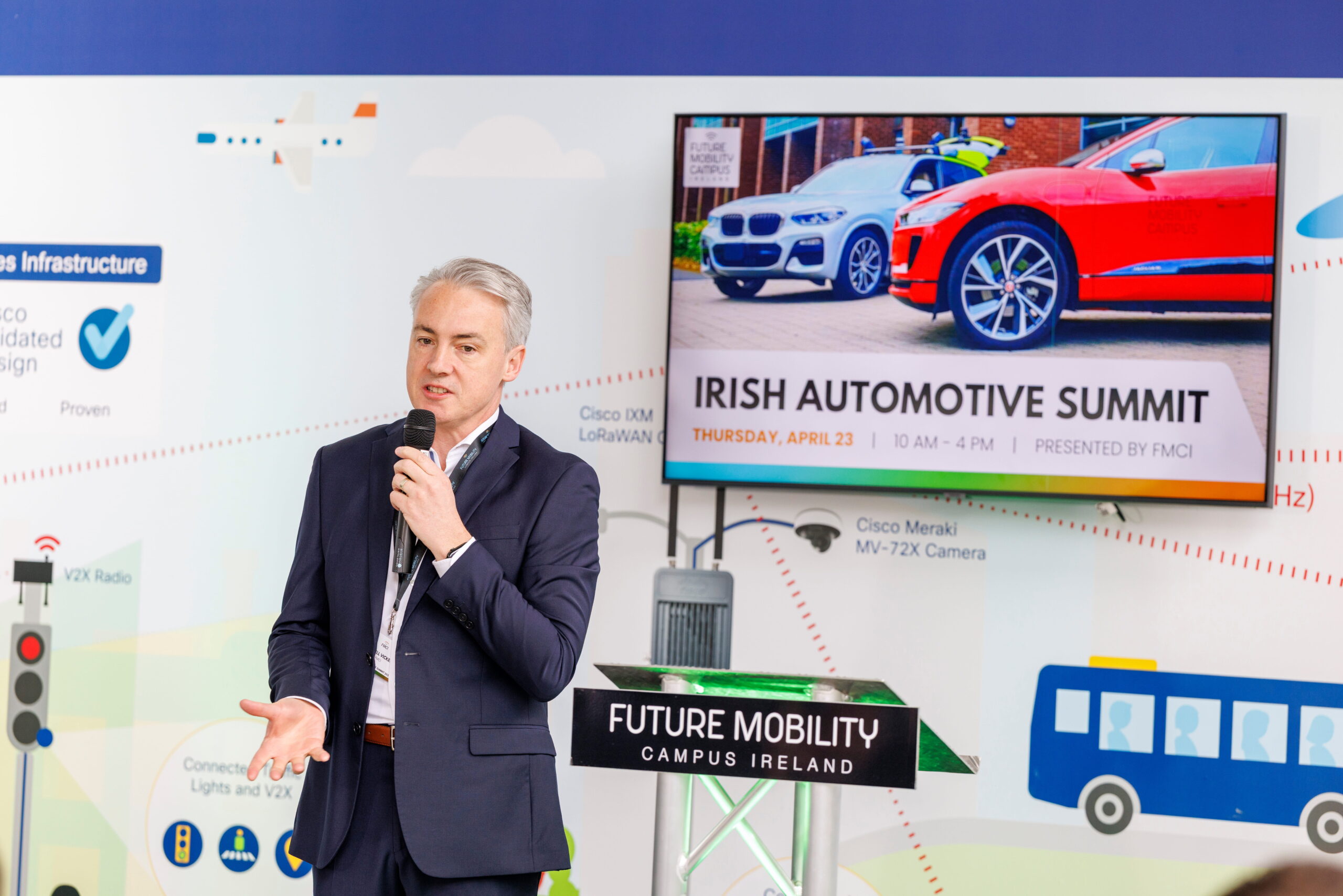
FMCI’sCEO Russell Vickers opened proceedings, outlining the driving goal and inspiration behind the Irish Automotive Summit. Not just a showcase, this event was envisioned as the foundation for a collaborative cluster that Ireland’s automotive industry has long needed.
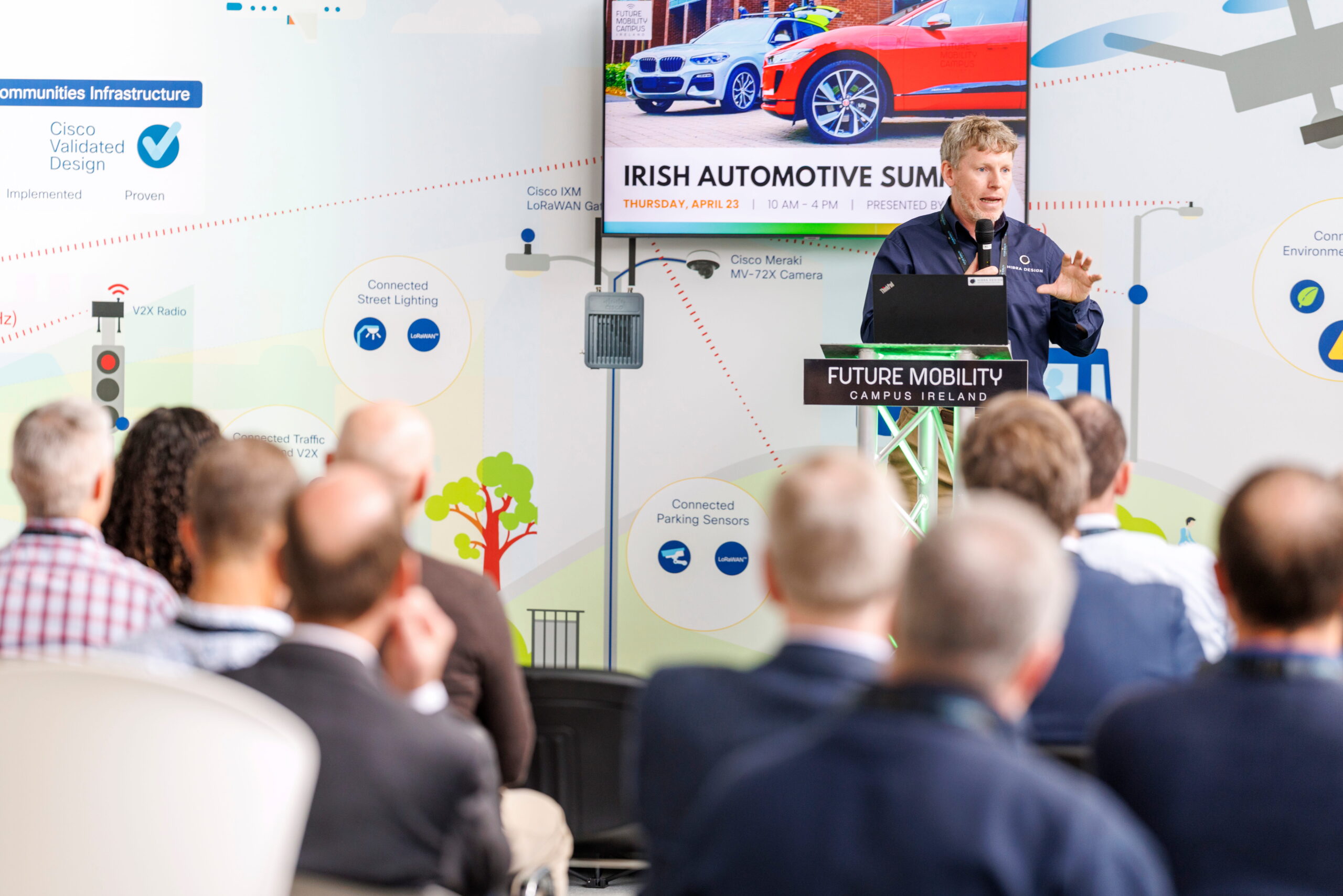
The keynote was delivered by Mike Keane of Hibra Design, who drew on deep experience in the automotive world to trace how the industry has evolved in Ireland.From early foundations to today’s increasingly technology-driven landscape, Keane’s overview and personal anecdotesprovided both grounding context and momentum for the conversations that followed.
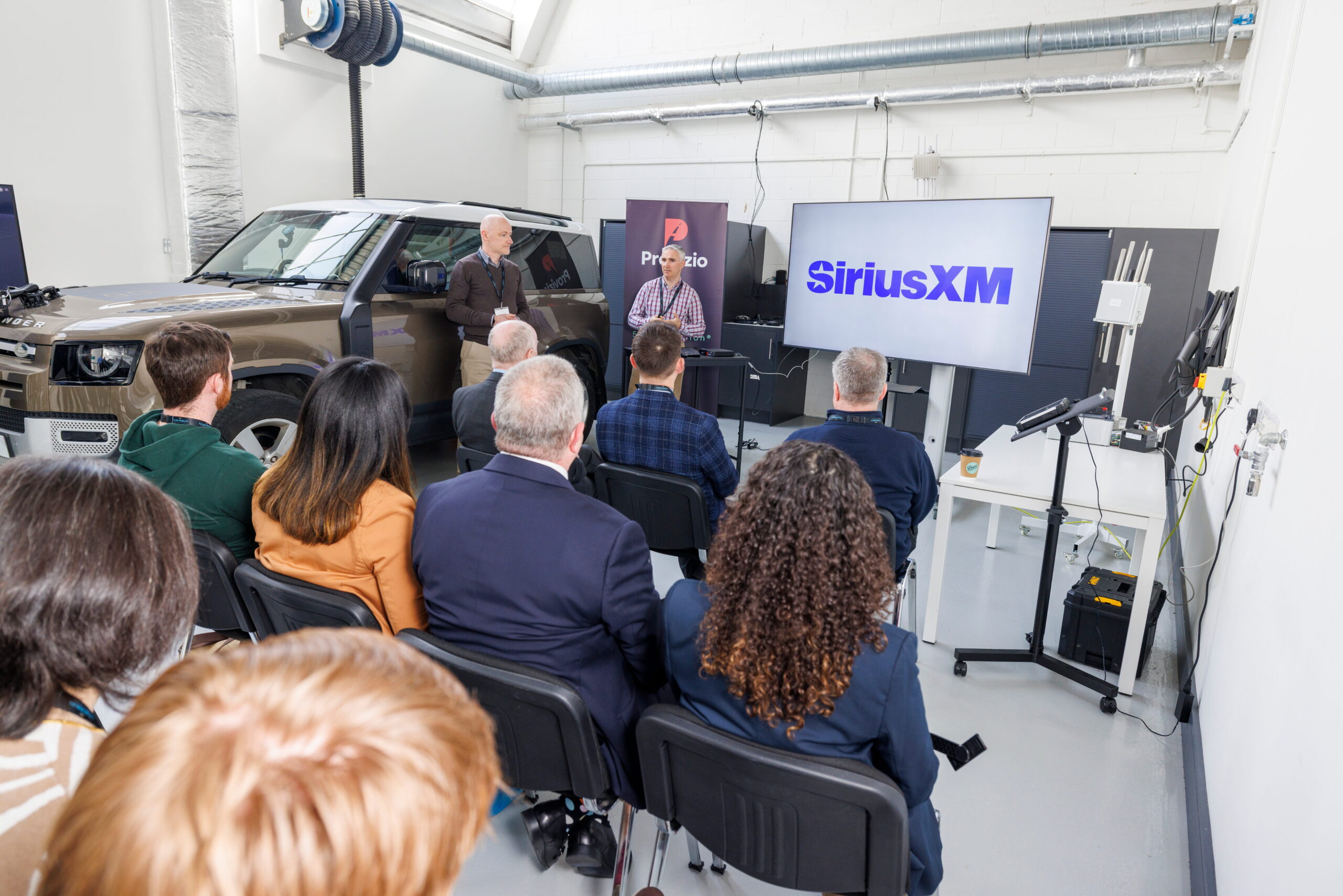
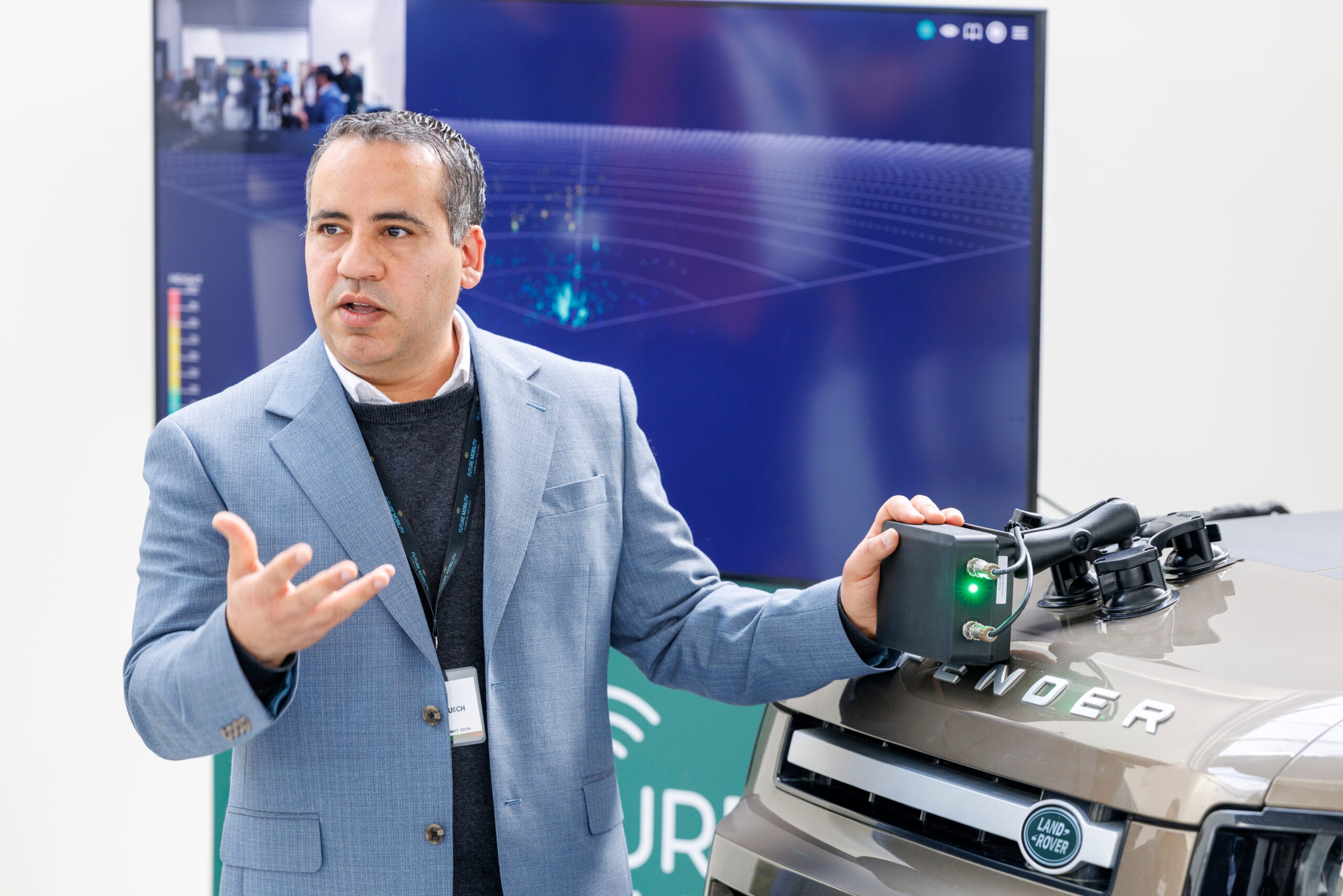
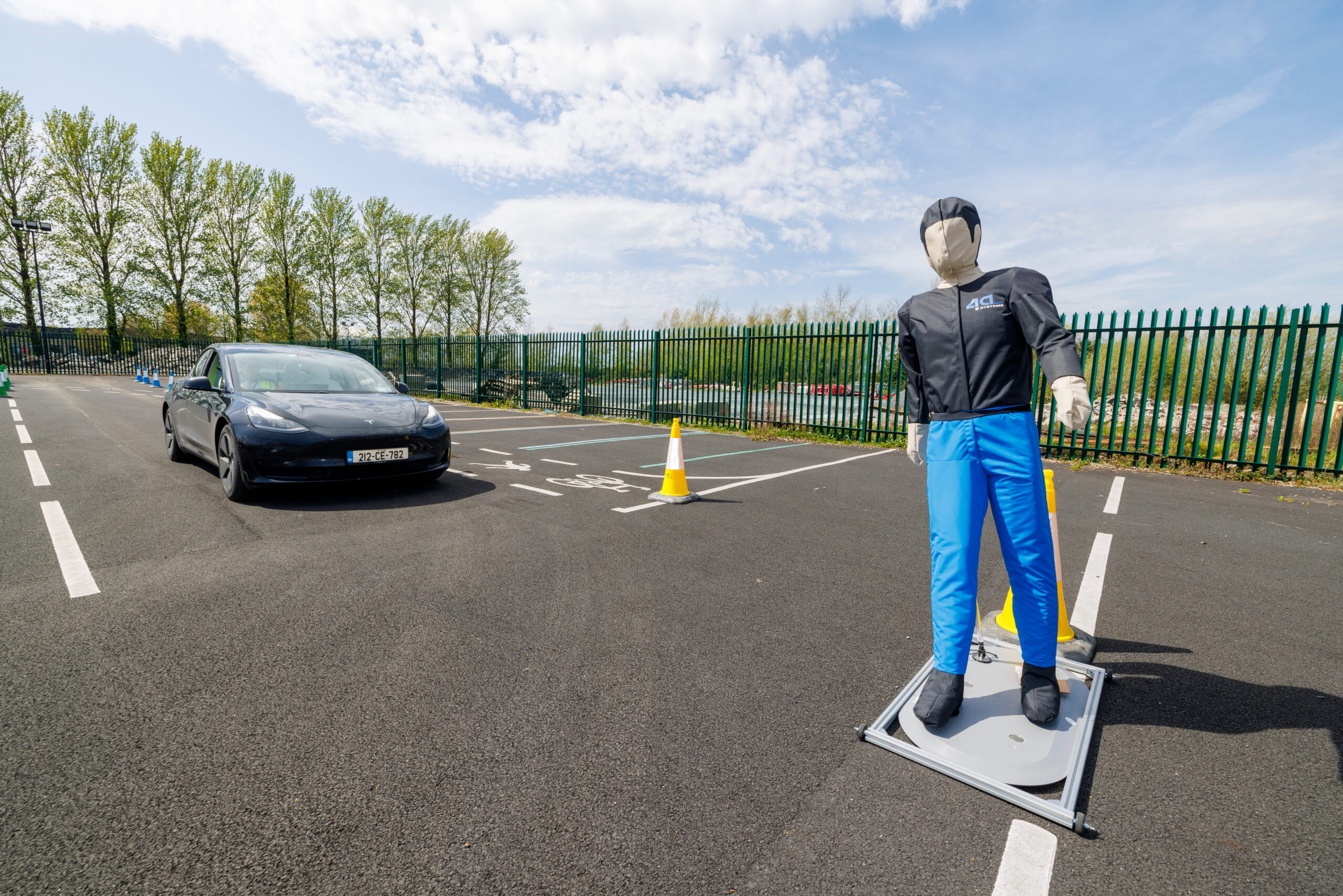
While breakout sessions got underway inside, Provizioran live demo drives through FMCI’s connected road network down to FMCI’s proving ground. From the backseat of the sensor-clad Land Rover Defender, attendees got a tangible sense of what advanced driver-assistance and perception technologies look like in action and the testing environments necessary to support them.
The afternoon brought a significant policy moment: a representative from the Department of Transport addressed the group on the advances to Ireland’s autonomous vehicle testing legislation, followed by a Q&A. With the regulatory environment evolving rapidly, this was a timely and well-received addition to the programme.
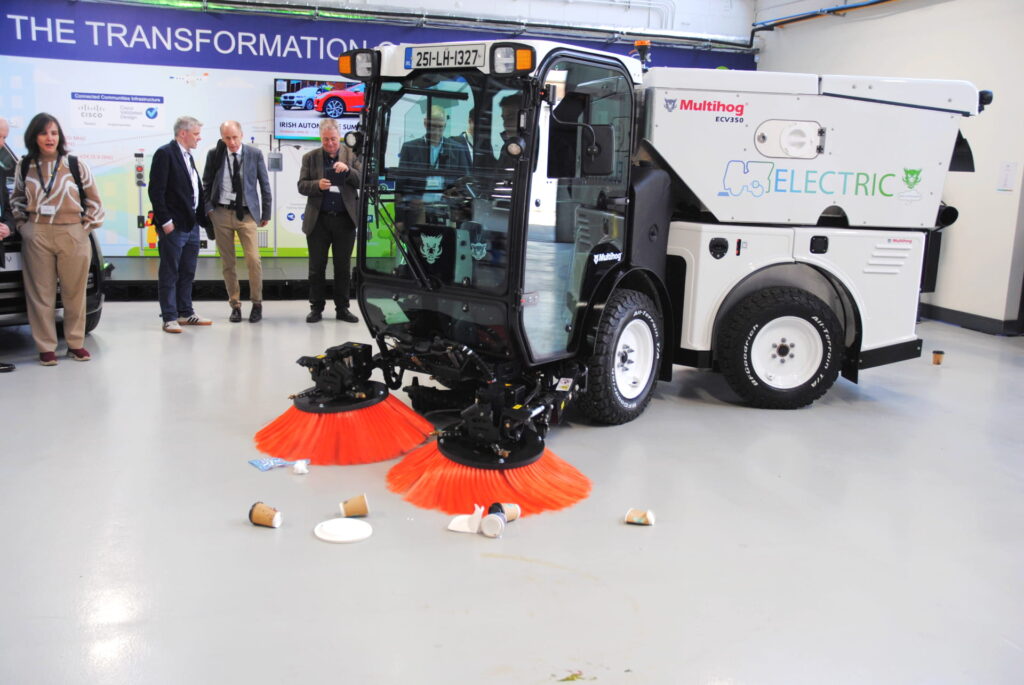
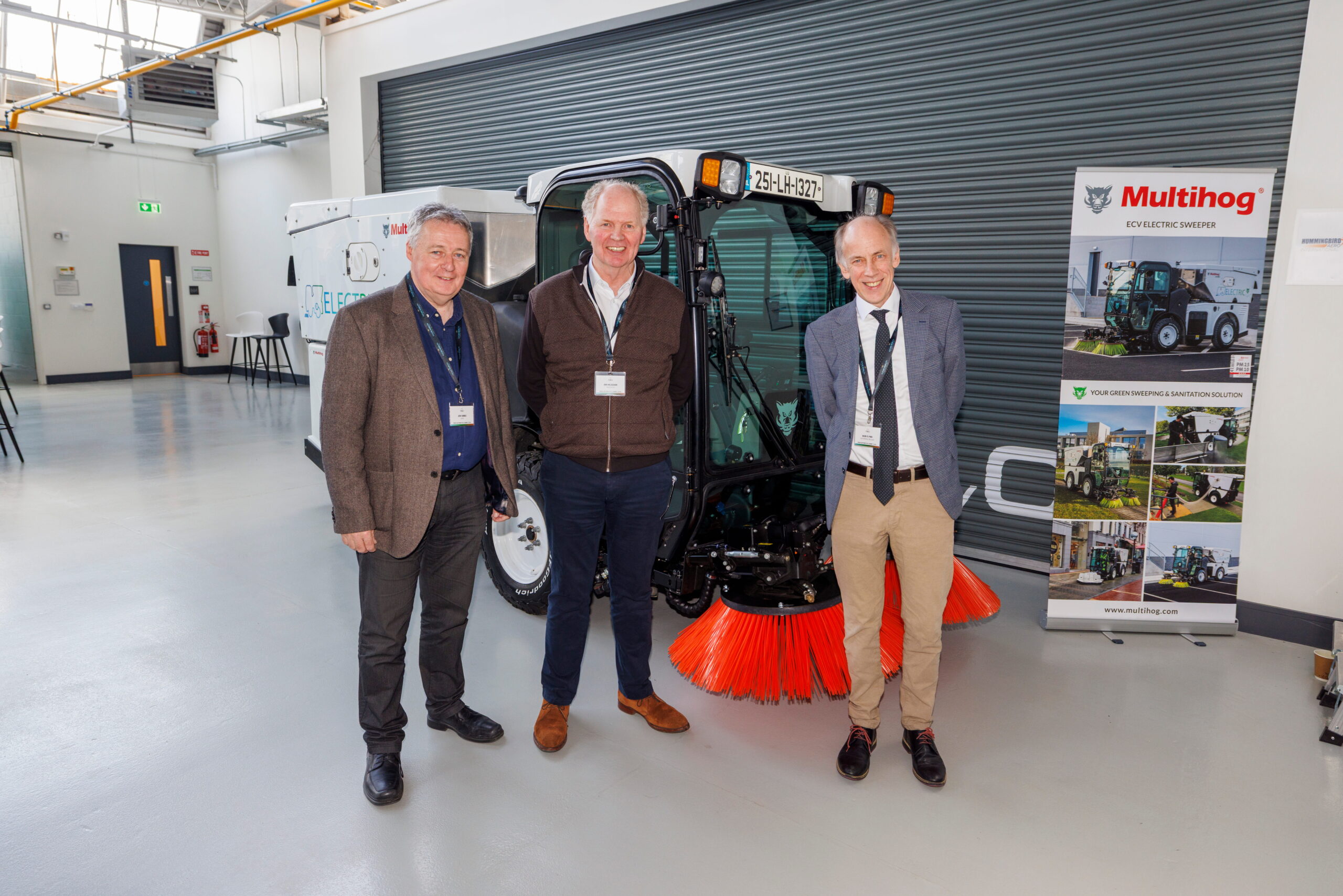
The day closed on a lighter note. Multihog, makers of electric utility vehicles, demonstrated their electric street sweeper on site, helping tidy up and signaling the end of the event.
More Than the Sum of Its Parts
By the end of the day, over 30 companies had shared ideas, exchanged contacts, and laid the groundwork for conversations that will continue to drive the industry forward. Business cards were exchanged, follow-up meeting scheduled, and the sense of a community began to take shape, pointing to a successful first run of the Irish Automotive Summit.
Next year’s Irish Automotive Summit is already taking shape. The second edition promises more companies, deeper connections, and a growing sense of collective identity for an industry that has always punched above its weight, and is only beginning to realise it. FMCI is proud to belong to it.
Future Mobility Campus Ireland (FMCI) is a dedicated testing and innovation facility for connected and autonomous vehicles located in Shannon. Learn more about our land mobility services.
Want to receive updates about what’s going on at FMCI? Fill out this form to subscribe to our newsletter and get notified about our news, future mobility insights, and upcoming events.